
Creating a Calming Essential Oil Spray for Your Dog’s Bed: A Guide for Pet Owners
Dogs can get anxious or stressed for many reasons. A simple way to help your furry friend relax is by making a calming essential oil spray for their bed. This natural solution can create a soothing environment for your pet.
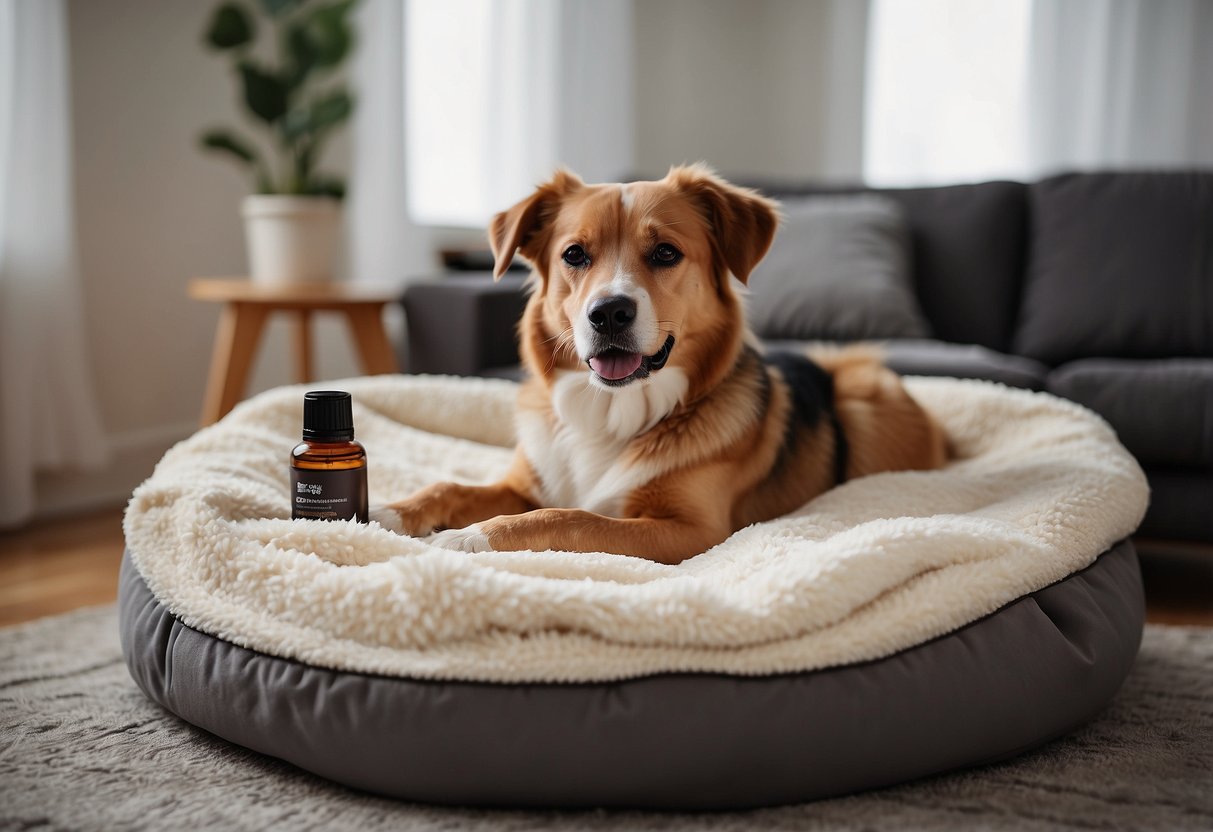
You can easily make a homemade calming spray for dogs using a few key ingredients. The spray uses essential oils known for their calming properties. Common oils used include lavender and chamomile.
When mixed with water in a spray bottle, these oils can help your dog feel more at ease.
It’s important to use the spray safely. Only apply it to your dog’s bedding or a bandana, not directly on their skin. Always dilute the oils properly and watch how your dog reacts.
With the right approach, a DIY calming spray can be a helpful tool for managing your dog’s stress.
Key Takeaways
- A homemade essential oil spray can help calm anxious dogs
- Use calming oils like lavender and chamomile diluted in water
- Apply the spray only to bedding or bandanas, not directly on your dog
The Benefits of Essential Oils for Dogs
Essential oils can help calm and relax dogs. They may also ease some health issues. But you need to use them carefully.
Understanding Aromatherapy for Canines
Dogs have a strong sense of smell. This makes aromatherapy work well for them. Certain scents can change how they feel and act.
Chamomile oil can help dogs relax. It may also soothe skin problems. Lavender is another calming scent for dogs.
Some oils can also help with pain. For example, frankincense and ginger may ease joint pain in older dogs.
Citrus oils like lemon or orange can keep bugs away. They also help get rid of bad smells.
You can use oils in different ways. Put a few drops on your dog’s bed. Or use a diffuser in the room. You can even put some on your hands and pet your dog.
Safety and Precautions
Not all essential oils are safe for dogs. Some can be toxic. Always check with your vet before using any new oil.
Never use tea tree oil on dogs. It can make them very sick. Avoid wintergreen and pine oils too.
Always dilute oils before using them. Mix them with a carrier oil like coconut oil.
Watch for signs that your dog doesn’t like an oil. They might sneeze, cough, or try to leave the room. If this happens, stop using that oil.
Don’t put oils near your dog’s eyes or nose. Keep them away from their food and water too.
If your dog seems sick after being around oils, call your vet right away. Look for signs like throwing up, not eating, or acting weird.
Choosing the Right Essential Oils
Picking safe and effective essential oils for your dog’s calming spray is key. You’ll want to balance soothing scents with safety concerns.
Soothing Scents for Anxiety Relief
Lavender is a top choice for calming dogs. Its gentle scent helps reduce stress and promote relaxation. You can use lavender in a diffuser or apply it to your dog’s bedding.
Chamomile is another good option. It has a mild, sweet smell that can ease anxiety.
Valerian root oil may help skittish dogs. It can lower fear and manage anxiety levels, especially for dogs scared of loud noises or new places.
Frankincense has a warm, woody scent. It may help calm hyperactive dogs and reduce stress.
Essential Oil Toxicity and Dogs
Not all essential oils are safe for dogs. Some can be toxic if inhaled or absorbed through the skin.
Avoid tea tree oil, as it can cause serious health issues in dogs. Peppermint, citrus oils, and eucalyptus can also be harmful.
Always dilute essential oils before use. Mix a few drops with a carrier oil like coconut oil. This makes them safer for your dog.
Start with a small amount and watch for any bad reactions. Signs of trouble include drooling, vomiting, or lethargy.
Ask your vet before using any new oils. They can advise on safe options for your dog’s specific needs.
Crafting Your Calming Spray
Making a calming spray for your dog’s bed is easy and cost-effective. You’ll need a few key items and essential oils to create a blend that soothes your pup.
Materials Needed
To make your calming spray, gather these items:
- A spray bottle
- Distilled water
- Witch hazel or vodka
- Essential oils (lavender, chamomile, etc.)
- Measuring spoons
- A small funnel (optional)
Choose a dark glass spray bottle to protect the essential oils from light. Witch hazel or vodka helps the oils mix with water and acts as a preservative.
Creating the Blend
Pick 2-3 dog-safe essential oils for your blend. Here’s a simple recipe to try:
- 10 drops lavender oil
- 5 drops chamomile oil
- 3 drops sweet orange oil
Mix these oils in your spray bottle. Add 1 ounce of witch hazel or vodka. Fill the rest with distilled water, leaving some space at the top. Shake well before each use.
You can adjust the scent by changing the number of drops or trying different oil combos. Always use high-quality essential oils meant for aromatherapy.
Determining the Correct Dilution
The right dilution is crucial for your dog’s safety. A good rule is to use a 0.5-1% dilution for dogs. This means 3-6 drops of essential oil per ounce of carrier liquid.
For small dogs or puppies, use the lower end of this range. For larger dogs, you can go up to 1%. Never use more than 1% dilution on dogs.
Test the spray on a small area of your dog’s bed first. Watch for any negative reactions. If your dog seems uncomfortable, reduce the amount of essential oils in your blend.
Using the Essential Oil Spray
The essential oil spray you’ve made can help calm your dog. You’ll need to use it correctly to get the best results. Here’s how to apply it and how often to use it.
Application Techniques
Shake the spray bottle well before each use. Hold it about 6-8 inches away from your dog’s bed. Spray lightly over the surface. Don’t soak the bed – a light mist is enough.
Avoid spraying directly on your dog. The spray is for their bedding, not their fur. If your dog has sensitive skin, test a small area of the bed first.
Let the spray dry for a few minutes before letting your dog use the bed. This gives the oils time to settle.
For best results, spray your dog’s bed about 15-20 minutes before their usual bedtime. This allows the scent to spread.
Frequency of Use
Use the spray once a day at first. You can increase to twice daily if needed. Don’t overuse the spray – too much scent can be overwhelming for dogs.
If your dog seems stressed, you can use the spray more often. But don’t rely on it as the only way to calm your pet.
Watch how your dog reacts to the spray. If they seem more relaxed, you’re using it right. If they avoid their bed, reduce how often you use it.
Replace the spray every 2-3 months. The oils can lose their strength over time. Always keep the bottle in a cool, dark place to make it last longer.
Storing and Maintaining the Spray
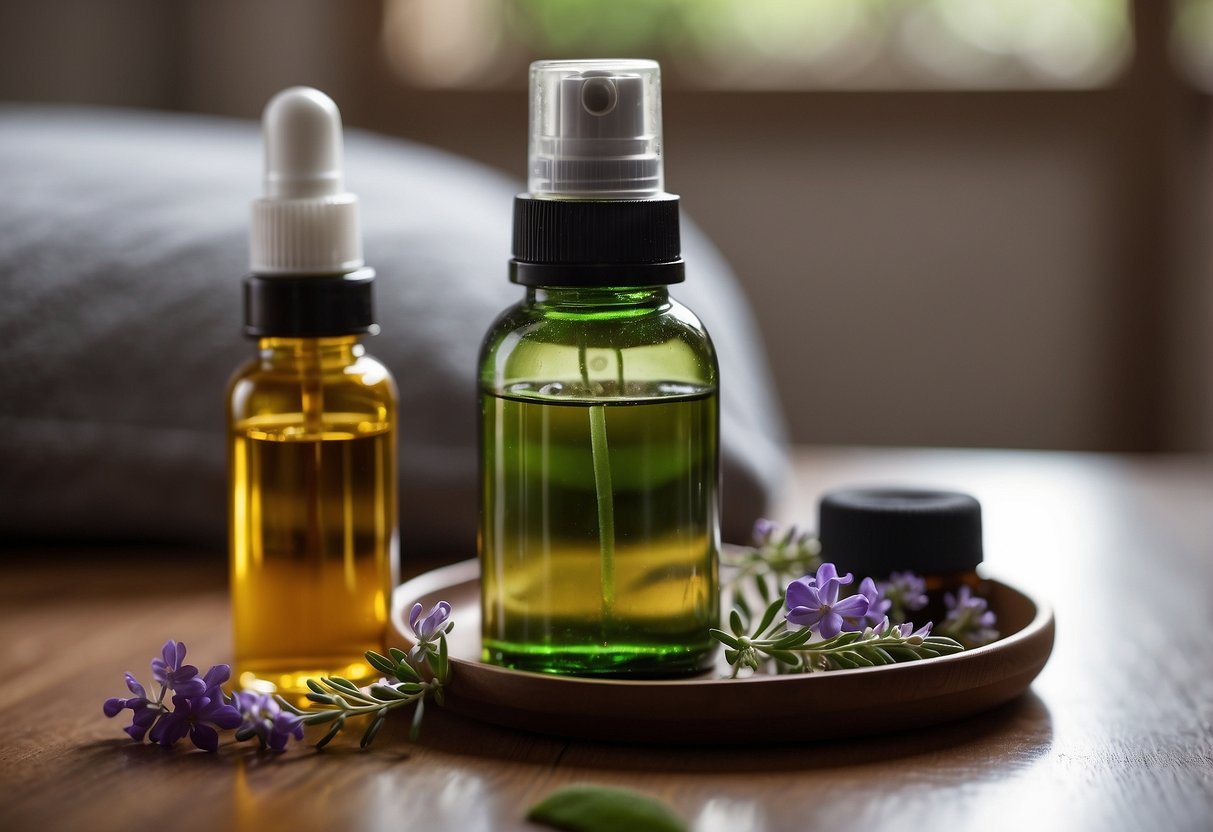
Proper storage and care of your dog’s calming essential oil spray will keep it fresh and effective. Knowing the ideal conditions and shelf life helps you get the most out of your blend.
Ideal Storage Conditions
Keep your spray in a cool, dark place away from direct sunlight. A bathroom cabinet or dresser drawer works well. Avoid storing it in hot or humid areas.
Use a dark glass bottle to protect the oils from light damage. Amber or cobalt blue bottles are good choices.
Make sure the spray nozzle is closed tightly when not in use. This prevents air from entering and keeps the scent fresh.
Label your bottle with the date you made it and the oils used. This helps you track freshness and remember the blend.
Clean the spray nozzle regularly to prevent clogging. Wipe it with a damp cloth after each use.
Shelf Life of the Blend
Your dog’s calming spray typically lasts 3-6 months when stored properly. The exact time depends on the oils and base used.
Water-based sprays have a shorter shelf life than alcohol-based ones. Use distilled water to extend freshness.
Check your spray regularly for changes in smell or appearance. If it smells off or looks cloudy, it’s time to make a new batch.
You can add a preservative like vitamin E oil to extend shelf life. Use 1-2 drops per ounce of spray.
Make small batches to ensure you always have a fresh supply. This also lets you adjust the blend as needed.
Monitoring Your Dog’s Response
When using essential oil sprays, split the text into at most two sentences per paragraph. It’s crucial to watch your dog closely. Pay attention to any changes in behavior or physical reactions. Adjust the formula if needed to ensure your dog’s comfort and safety.
Watching for Adverse Reactions
Keep an eye on your dog after applying the spray to their bed. Look for signs of irritation or discomfort such as excessive scratching or licking. Other signs to watch for are sneezing or coughing, red or inflamed skin, and changes in appetite or energy levels.
If you notice any of these symptoms, stop using the spray right away. Wash your dog’s bedding to remove any leftover oils. Contact your vet if symptoms persist or worsen.
Some dogs may be more sensitive to certain scents. Lavender and chamomile are generally safe, but every dog is different. Trust your instincts if you feel your pet is reacting badly.
Adjusting Formula Concentrations
If your dog shows mild discomfort, try diluting the spray. Add more water to reduce the strength of the oils. Start with a 50% dilution and see how your dog responds.
You can also try changing the oil blend. Some dogs may prefer cedarwood or frankincense over lavender. Experiment with different combinations to find what works best.
Keep a log of which oils and concentrations you use. Note your dog’s reactions to each blend. This will help you fine-tune the perfect formula for your pet over time.
Remember, less is often more with essential oils. A light scent is usually enough to create a calming effect without overwhelming your dog’s sensitive nose.
Alternatives to Essential Oil Sprays
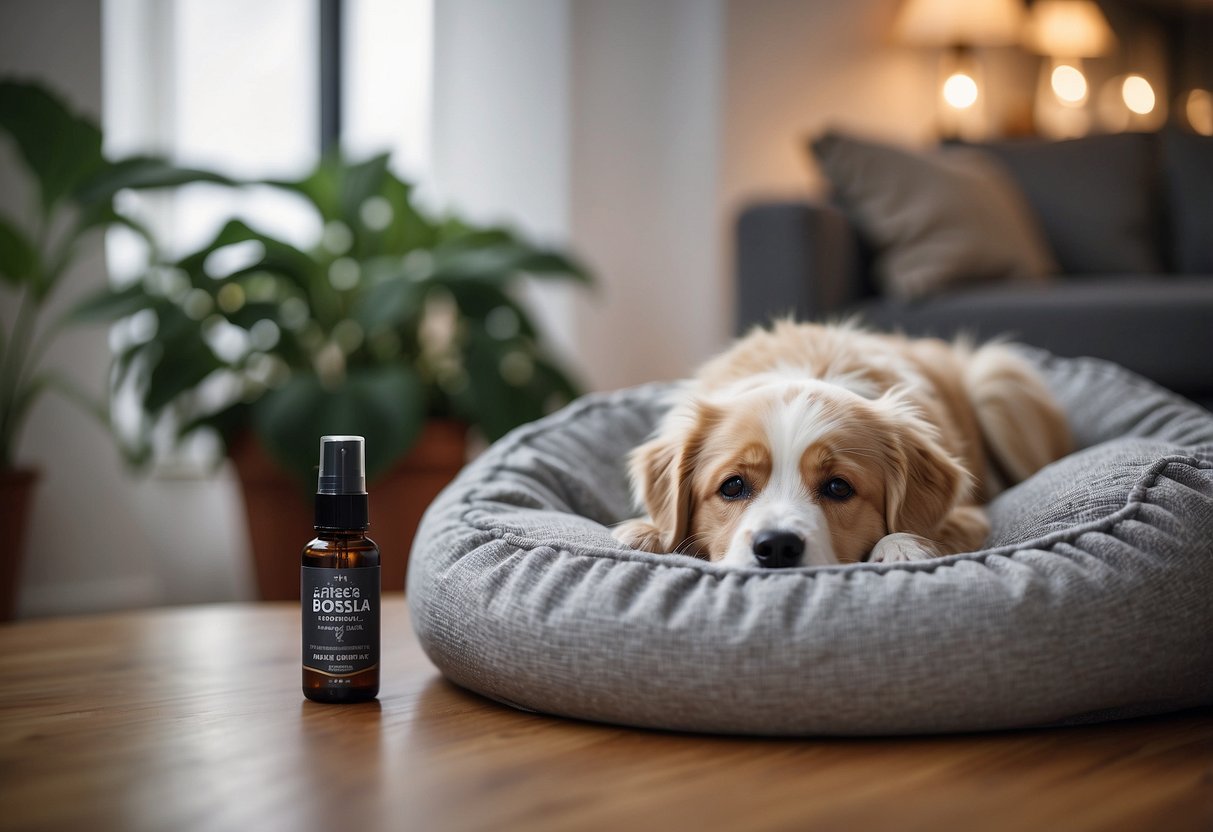
Essential oil sprays aren’t the only way to calm your dog. You can try other natural methods or seek professional advice for safe aromatherapy use.
Other Natural Calming Solutions
You can use calming music to soothe your dog. Soft classical tunes or specially designed pet relaxation tracks can help reduce anxiety.
Another option is a pressure wrap like a ThunderShirt. These snug garments apply gentle pressure to your dog’s body, mimicking a comforting hug.
Puzzle toys and chews can also help. They keep your dog’s mind occupied, reducing stress and boredom. Try filling a Kong toy with frozen treats for a longer-lasting distraction.
Exercise is key for a calm dog. Regular walks and playtime help burn excess energy. A tired dog is often a more relaxed dog.
Professional Advice on Aromatherapy
You should consult your vet before using any aromatherapy products on your dog. They can advise on safe options and proper usage.
Some vets may recommend pheromone diffusers like Adaptil. These mimic calming dog pheromones and can help reduce anxiety.
If you decide to use essential oils, ask about pet-safe options and dilution rates. Your vet might suggest gentler alternatives like lavender-scented bedding.
Frequently Asked Questions
Essential oil sprays can help calm dogs when used correctly. Safety, ingredients, and application methods are key for effective use. Here are answers to common questions about making and using calming sprays for dogs.
What is a safe essential oil dog spray recipe?
A safe recipe uses diluted essential oils. Mix 10 drops of lavender oil with 1 cup of distilled water in a spray bottle. Add 1 tablespoon of witch hazel to help the oils blend. Shake well before each use.
Can essential oils help in calming dogs when sprayed on their beds?
Yes, certain essential oils can help calm dogs. Lavender, chamomile, and cedarwood are known for their calming effects. Spray lightly on your dog’s bed or blanket, not directly on your pet.
How do you make a DIY lavender calming spray for dogs?
To make a lavender calming spray, combine 15 drops of lavender essential oil with 2 ounces of distilled water in a spray bottle. Add a teaspoon of vegetable glycerin to help the oil and water mix. Shake well before spraying on bedding.
Are there any essential oils that should be avoided in a dog’s calming spray?
Avoid using tea tree, peppermint, and citrus oils in dog sprays. These can be harmful to dogs. Stick to pet-safe oils like lavender, chamomile, and frankincense. Always dilute oils properly.
What are the best practices for using essential oil sprays around dogs?
Use sprays sparingly. Apply to bedding, not directly on your dog. Keep sprays out of reach. Watch for any adverse reactions. Stop use if your dog shows signs of discomfort or allergies.
How can I create a natural flea repellent spray for dogs using essential oils?
Mix 10 drops each of cedarwood and lemongrass oil with 1 cup of water.
Add 1 tablespoon of apple cider vinegar.
Spray on your dog’s collar or bedding, not directly on fur.
Test a small area first to check for reactions.